
January 9, 2026
How Debt Swaps Have Helped Indonesia Increase Funding for Health
By Mark P. Lagon and Alyssa Miller
Global Fund’s Debt2Health Program
In many low-and middle-income countries, rising debt burdens coupled with ongoing uncertainty in the global health financing landscape have become dual threats to healthcare capacity and access. High debt burdens lead to governments spending more on interest payments and less on social sectors, such as health. To address both sides of this problem, The Global Fund’s Debt2Health program converts debt into health investments.
In 2007, Indonesia and Germany launched the first Debt2Health swap. Germany cancelled $70 million in debt and in exchange Indonesia invested $35 million in HIV/AIDS programs through the Global Fund. Since that time, an additional 13 Global Fund Debt2Health swaps between creditor countries (Germany, Australia and Spain) and debtor countries (Indonesia, Pakistan, Côte d’Ivoire, Egypt, Cameroon, Democratic Republic of the Congo, Ethiopia, El Salvador, Jordan, Sri Lanka and Mongolia) have taken place with close to $500 million in debt converted into $330 million in health funding.
Debt swaps typically begin with the request of the creditor country. The Global Fund then works with both the debtor and creditor countries to negotiate the swap. These negotiations define the amount of debt to be converted, the amount of health investments to be made and where those investments will go. The debtor country then makes the agreed contributions to the Global Fund and the funding is channeled back to the country as additional grants for health programs, in line with the country’s national health strategy.
This financing innovation is a triple win—all three stakeholders benefit. The debtor country is able to gain fiscal space and convert funding from debt payments to health initiatives in line with its national strategy. The additional funding can also enable the debtor country to strengthen its health system, having broad reaching impacts outside of the focus of the debt swap. The creditor country facilitates healthcare access in low- and middle-income countries and burnishes their own international reputations. Meanwhile, the Global Fund is able to mobilize more financial resources to fund tailored programs for ending the epidemics of HIV, tuberculosis (TB) and malaria in recipient countries.
Debt2Health swaps are within a large set of financial arrangements known as debt-to-development swaps where government funds that would have serviced debt instead finance public goods such as education or health. This productive reallocation of resources is made possible by the creditor country agreeing with the debtor country to convert debt repayments from the debtor into investments in its own people. However, relative to the debt-to-development schemes that grew popular in the 1990s, Debt2Health has been viewed as a particularly effective means of financing health. The goal is to mobilize additional resources for health rather than being a substitute for larger debt relief or restructuring programs.
Debt2Health swaps have avoided the pitfalls of other debt-to development schemes through the agile involvement of the Global Fund. The Global Fund’s “Unfunded Quality Demand” (a pipeline of technically sound, aligned to the country’s strategy, ready-to-implement health programs awaiting for funding ) allows for the proceeds of debt swaps to flow into existing projects, meaning that implementation timelines or schedule of payments do not constrain impactful projects. Further, this method avoids high implementation costs often seen with new projects that would take up a large percentage of funding. Instead, funds made available from the debt swaps can flow into funding gaps in pre-defined priority needs within the country’s existing strategy. Additionally, the Global Fund works with governments and health finance experts to have a progressive increase of resources for health, ensuring that the Debt2Health funds complement rather than replace existing domestic funding for health. This is in line with the Global Fund incentivizing implementing governments to progressively finance more of their own health programs and advance toward full country responsibility and agency.
Indonesia’s Debt2Health Swaps
With the exception of the first swap in 2007, Indonesia’s Debt2Health agreements have included a focus on tuberculosis epidemic control. Indonesia has the second largest tuberculosis burden of any country globally, exacerbated by simultaneously having the second largest gap between estimated incidence and reported cases (“missing cases”). As such, the government of Indonesia made epidemic control of tuberculosis a major priority in 2024 with strategies focused on shorter treatment regimens, screenings of close contacts of those with tuberculosis and expanded use of X-ray exams including the use of portable X-rays. With Global Fund investments, Indonesia has implemented programs that have included:
- Increasing the number of accurate and timely diagnoses, resulting in patients receiving the right treatment faster and reducing the spread of tuberculosis.
- Moving treatment of drug-resistant cases from hospitals to primary health clinics, making treatment more cost-effective and accessible for patients.
- The creation of a specialized workforce (“cadres”) focused on drug-resistant TB care.
- Roll-out of BPaL/M which involves only 6-months of treatment compared to the 18-24 months required of other treatments. BPaL/M also has fewer debilitating side effects. Decreasing the treatment time and side effects results in patients being more likely to complete their treatment course, which in turn decreases drug resistance.
This work has been financed in part by Debt2Health swaps. Germany and Indonesia’s first Debt2Health swap in 2007 enabled the conversion of $70 million of debt repayments into $35 million in health investments for HIV/AIDS programs, funding the reduction of HIV-related morbidity and mortality and strengthening Community and Health Systems. Australia and Indonesia had a Debt2Health swap in 2010 where $71 million of commercial debt was converted into $35 million in health investments in domestic TB programs. This debt swap resulted in the additional treatment of 115,000 people and prevented over 20,000 infections.
In 2021, Germany and Indonesia agreed to convert $56 million of debt repayments into funds for tuberculosis programs. The impact of this swap between 2021 and 2022 included the provision of over 2,000 GeneXpert® machines at 1,946 health facilities; TB treatment for one quarter (3,500) of diagnosed drug-resistant TB cases; a 52% increase in TB case notification in public health facilities; and a 102% increase in TB case notification in private facilities. (Source: Global Fund case study, September 21, 2023)
In 2024, Germany and Indonesia signed the largest Debt2Health agreement to date, converting €75 million of Indonesia’s debt into malaria and tuberculosis programs and health system strengthening for a future when Global Fund assistance will end. In this sense the Global Fund has catalyzed tangible progress in transition to country ownership. This debt swap’s primary goals are to support malaria control, strengthen diagnostic and local pharmaceutical capacities, and expand TB screening, treatment access and community-based TB programs, helping to address the country’s high TB burden. Bayu Teja Muliawan, the Senior Advisor to the Minister on Health Economics at the Ministry of Health and chair of Indonesia’s (Global Fund) Country Coordinating Mechanism helped shape the use of the 2024 debt swap. He was enthusiastic about the impact of Debt2Health programs stating that “through the Debt2Health program, funding gaps for AIDS, TB and malaria programs can be filled, especially for malaria. This is very important because malaria control needs a lot of money, while funding is still limited, especially in Papua.”
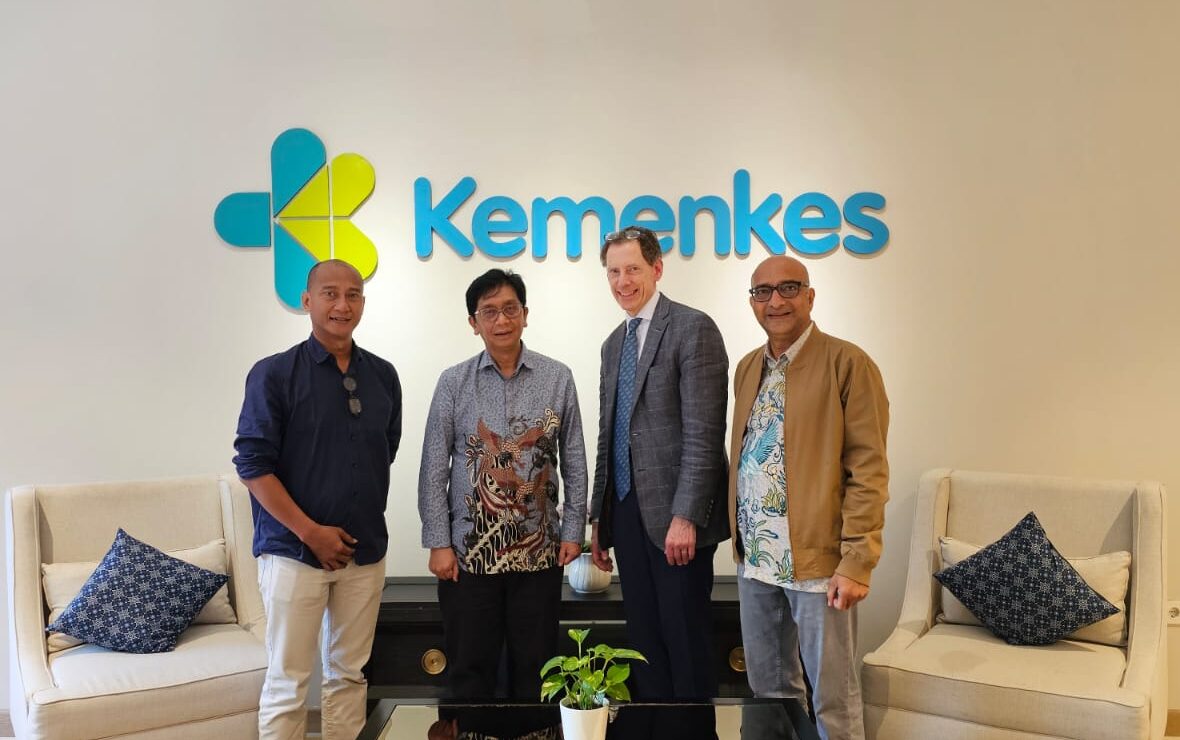
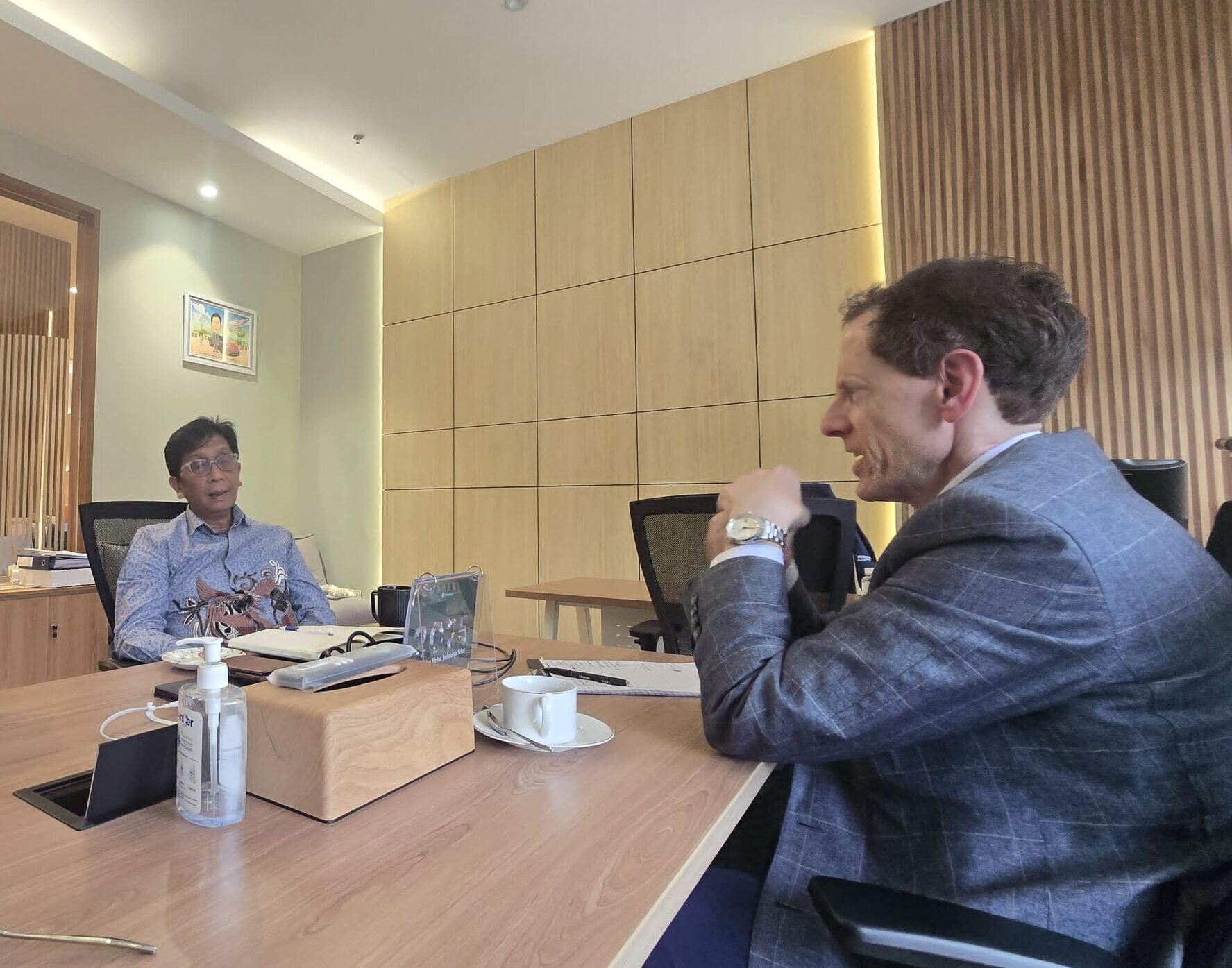
Mark Lagon (Friends) meets with Bayu Teja Muliawan (Indonesia’s Ministry of Health) and Spiritia Foundation leaders
Indonesia’s D2H experience is striking. Indonesia is no longer approaching creditors for debt swaps as an over-indebted country in need of debt relief (as in the 1990s). Instead, it is engaging as a market-access country, seeking additional funding for its health programs through D2H swaps, while ensuring that its participation in debt swaps is not mistaken for a signal of debt distress, especially by credit rating agencies.
Debt2Health swaps are an innovative way of financing healthcare while alleviating some of the debt burden of countries. Heavy debt-servicing obligations are a major barrier to epidemic control of HIV, TB and malaria in numerous countries with a lower income status and a higher percentage of national budgets going to servicing debt than Indonesia – notably in sub-Saharan Africa. As for Indonesia, these swaps have helped improve national health outcomes by significantly expanding TB detection and treatment, leading to higher case notification, broader access to drug-resistant TB care, and the prevention of thousands of new infections.
In this time of rethinking the ways in which global health programs are funded and countries gain increased responsibility, it is important to consider existing tools that have already been shown to be successful. Among methods of innovative finance, those which are demonstrably efficacious and yield additive financing for broad healthcare access deserve replication and even refinement. Ramping up Debt2Health by increasing the number of creditor countries involved and the number of swaps is one method to emphasize in an overall strategy to accelerate progress toward sustainable health programs and country ownership. The Global Fund’s agility and accrued acumen as the world’s largest health financing institution have made it a valuable catalyst and model on the road to ending epidemics and viable transition from external aid.
Mark P. Lagon is Chief Policy Officer at Friends of the Global Fight Against AIDS, Tuberculosis and Malaria, and Adjunct Professor at Georgetown University’s Master of Science in Foreign Service Program. Alyssa Miller is Policy Intern at Friends of the Global Fight Against AIDS, Tuberculosis and Malaria, and a recent graduate of the Master of Science in Global Health program at Georgetown University.